

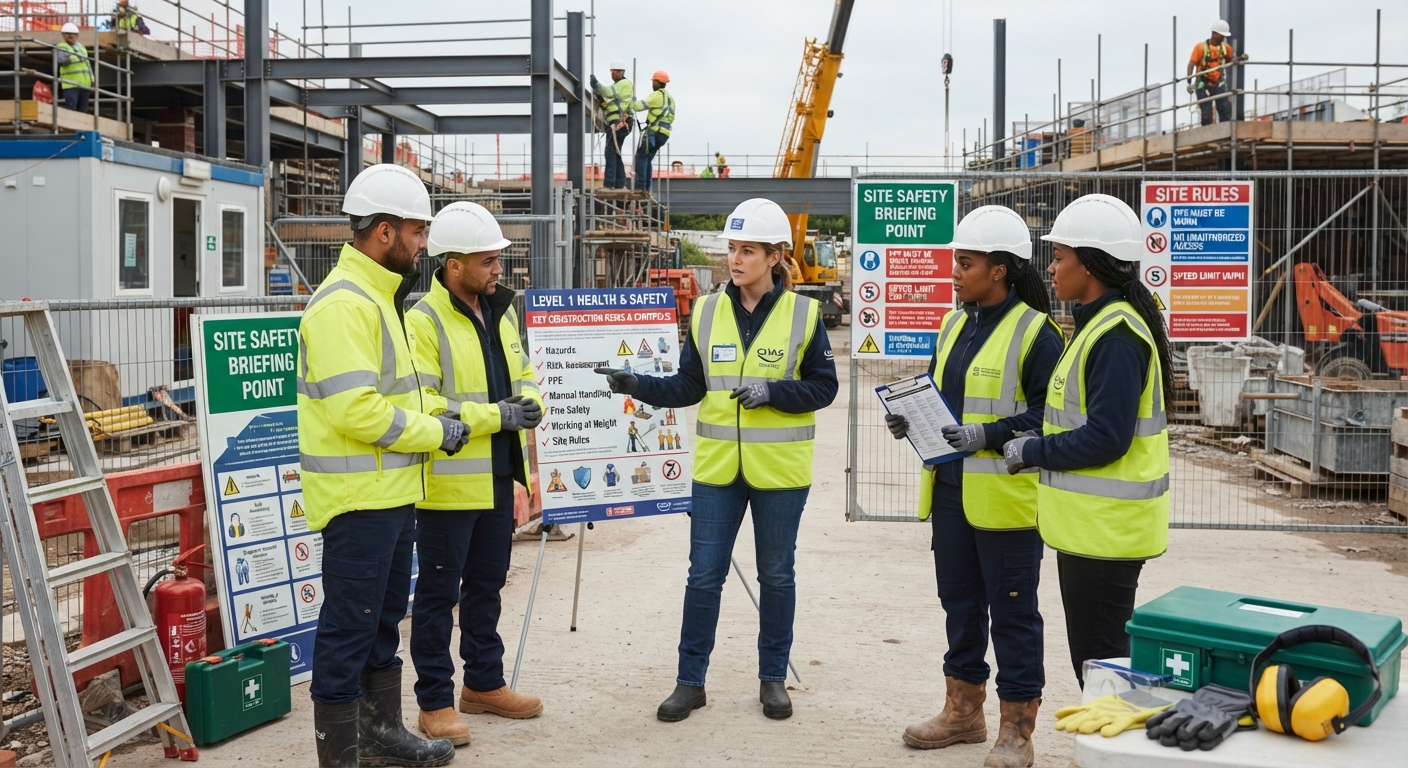
Description
Course syllabus and learning outcomes
Module 1: Introduction to Health and Safety in Construction
Learners will understand why health and safety is essential in the construction industry and how safe working practices help prevent accidents, injuries and work-related illnesses.
Topics include:
- The importance of health and safety on construction sites.
- Basic health and safety responsibilities of employers and workers.
- Relevant health and safety legislation and workplace procedures.
- The consequences of unsafe working practices.
- The importance of communication, cooperation and personal responsibility.
Learning outcome: Understand the importance of health and safety and the responsibilities involved in maintaining a safe construction environment.
Module 2: Hazards, Risks and Risk Assessment
Learners will develop an understanding of workplace hazards, the risks they present and the measures used to control them.
Topics include:
- Identifying common construction hazards.
- Understanding the difference between a hazard and a risk.
- The purpose and basic principles of risk assessment.
- Identifying who may be harmed and how.
- Applying suitable control measures.
- Following site rules, safety instructions and safe systems of work.
- Reporting hazards and unsafe conditions.
Learning outcome: Recognize common hazards and understand how risk assessments and control measures help prevent workplace accidents.
Module 3: Slips, Trips, Falls and Working at Height
Learners will explore the risks associated with falls and unsafe access arrangements on construction sites.
Topics include:
- Common causes of slips, trips and falls.
- Maintaining good housekeeping and clear access routes.
- Safe use of ladders, scaffolds and access equipment.
- Understanding the dangers of unprotected edges, openings and fragile surfaces.
- Preventing falls through suitable planning and protective measures.
- Following site procedures for working at height.
Learning outcome: Identify fall-related hazards and understand the precautions required to work safely at height.
Module 4: Safe Manual Handling
Learners will understand how incorrect lifting, carrying, pushing and pulling can cause injuries.
Topics include:
- Common manual-handling injuries.
- Assessing loads, tasks and working environments.
- Safe lifting and carrying principles.
- Avoiding unnecessary lifting and using mechanical aids where appropriate.
- Team handling and communication.
- Reporting injuries, pain and unsafe lifting conditions.
Learning outcome: Understand the importance of safe manual handling and ways to reduce the risk of musculoskeletal injuries.
Module 5: Plant, Machinery and Equipment Safety
Learners will examine the hazards associated with construction machinery, tools and moving equipment.
Topics include:
- Common construction plant and equipment hazards.
- Safe pedestrian routes and vehicle exclusion zones.
- Blind spots, reversing vehicles and moving machinery.
- Pre-use checks and reporting defective equipment.
- The importance of guards, safety devices and authorized operation.
- Safe use of tools and equipment.
- Noise exposure and hearing protection.
Learning outcome: Understand how to work safely around plant, machinery and equipment and recognize situations that require immediate reporting.
Module 6: Occupational Health and Respiratory Risks
Learners will consider how construction activities can affect workers’ short- and long-term health.
Topics include:
- Dust and airborne particles.
- Respiratory hazards associated with cutting, drilling and demolition.
- Risks from silica dust and asbestos-containing materials.
- Noise and vibration exposure.
- Skin contact with hazardous substances.
- The importance of suitable control measures, ventilation and appropriate respiratory protective equipment.
- Reporting symptoms and suspected exposure.
Learning outcome: Recognize common occupational health hazards and understand how exposure can be reduced.
Module 7: Fire, Electricity and Gas Safety
Learners will explore the causes of fire, electrical accidents and gas-related incidents in construction environments.
Topics include:
- Common causes of construction-site fires.
- Fire prevention and emergency evacuation procedures.
- Safe use of electrical tools and equipment.
- Damaged cables, electrical supplies and overhead or underground services.
- Risks associated with gas cylinders and gas installations.
- The importance of permits, isolation procedures and competent personnel where required.
- Reporting electrical, gas and fire hazards.
Learning outcome: Identify common fire, electrical and gas hazards and understand the precautions required to reduce risks.
Module 8: Chemicals and Other Construction-Site Hazards
Learners will develop awareness of hazardous substances and additional risks commonly found on construction sites.
Topics include:
- Identifying hazardous substances and understanding warning labels.
- Safe storage, handling and use of chemicals.
- Control of Substances Hazardous to Health (COSHH).
- Reading safety information and following workplace instructions.
- Spill reporting and emergency procedures.
- Working near excavations, confined spaces and underground services.
- Recognizing unsafe conditions and seeking assistance.
Learning outcome: Understand the risks associated with hazardous substances and other construction-site hazards and the importance of following appropriate safety procedures.
Module 9: Vehicles, Personal Protective Equipment and General Site Safety
Learners will understand how safe movement around a construction site and appropriate protective equipment help prevent injuries.
Topics include:
- Safe movement of pedestrians and vehicles.
- Following traffic management arrangements.
- Understanding the purpose and limitations of personal protective equipment (PPE).
- Correct use of hard hats, safety footwear, gloves, eye protection and high-visibility clothing where required.
- Maintaining safe working areas.
- Following warning signs, barriers and site instructions.
- Reporting accidents, near misses and unsafe behavior.
Learning outcome: Understand the importance of PPE, site rules, safe access arrangements and accident reporting.
Module 10: Review, Assessment and Progression
Learners will review the key principles covered throughout the course and prepare for the required assessment.
Topics include:
- Reviewing health and safety responsibilities.
- Revising risk assessment and hazard control.
- Reviewing manual handling and working-at-height precautions.
- Recognizing occupational health risks.
- Understanding safe working around plant and equipment.
- Preparing for the relevant qualification assessment.
- Understanding potential progression towards construction employment and the CSCS Green Laborer Card.
Learning outcome: Demonstrate the required knowledge of construction health and safety through the applicable assessment process and understand the next steps for progression.
The syllabus above follows the main subject areas commonly covered by recognized Level 1 construction health and safety qualifications. The final module structure and assessment must match the specific awarding organization’s requirements.
3. Course delivery and assessment
Learning methods
Classroom teaching, presentations, tutor-led discussions, construction-site scenarios, learning materials and practice questions, as appropriate to the approved course.
Guided learning hours
The AIM Level 1 Award specifies 21 guided learning hours and 29 total qualification hours. The duration for your course should be confirmed against the qualification you intend to deliver.
Assessment method
Assessment may include an externally marked or on-screen multiple-choice examination, depending on the awarding organization and qualification specification.
Certification
Learners who meet all applicable assessment requirements may receive the relevant qualification certificate through the approved awarding organization.
4. Expected learning outcomes
By the end of the course, learners should be able to:
-
Explain the importance of health and safety in a construction environment.
-
Identify common workplace hazards and understand basic risk assessment principles.
-
Describe methods of preventing slips, trips and falls.
-
Explain safe manual-handling practices.
-
Recognise hazards associated with working at height.
-
Identify health risks associated with dust, noise, vibration and hazardous substances.
-
Understand basic fire, electrical and gas safety precautions.
-
Explain the importance of PPE and safe working procedures.
-
Recognize hazards involving vehicles, plant, machinery and equipment.
-
Understand how to report accidents, near misses and unsafe conditions.
5. Progression opportunities
After completing the qualification, learners may consider:
-
Applying for entry-level construction labouring opportunities.
-
Taking the relevant CITB Health, Safety and Environment test.
-
Applying for a CSCS Green Labourer Card, subject to the current eligibility requirements.
-
Progressing to further training in manual handling, working at height, asbestos awareness, COSHH, first aid or other relevant construction safety subjects.
The Level 1 qualification alone does not automatically guarantee a CSCS card or employment. The relevant card application and eligibility requirements must also be met.
6. Contact and enrolment
Markhor Shield Security Service
Training enquiries and course information
+44 (0)1582 750630
Official website
markhorshieldsecurityservices.com


Reviews
There are no reviews yet.